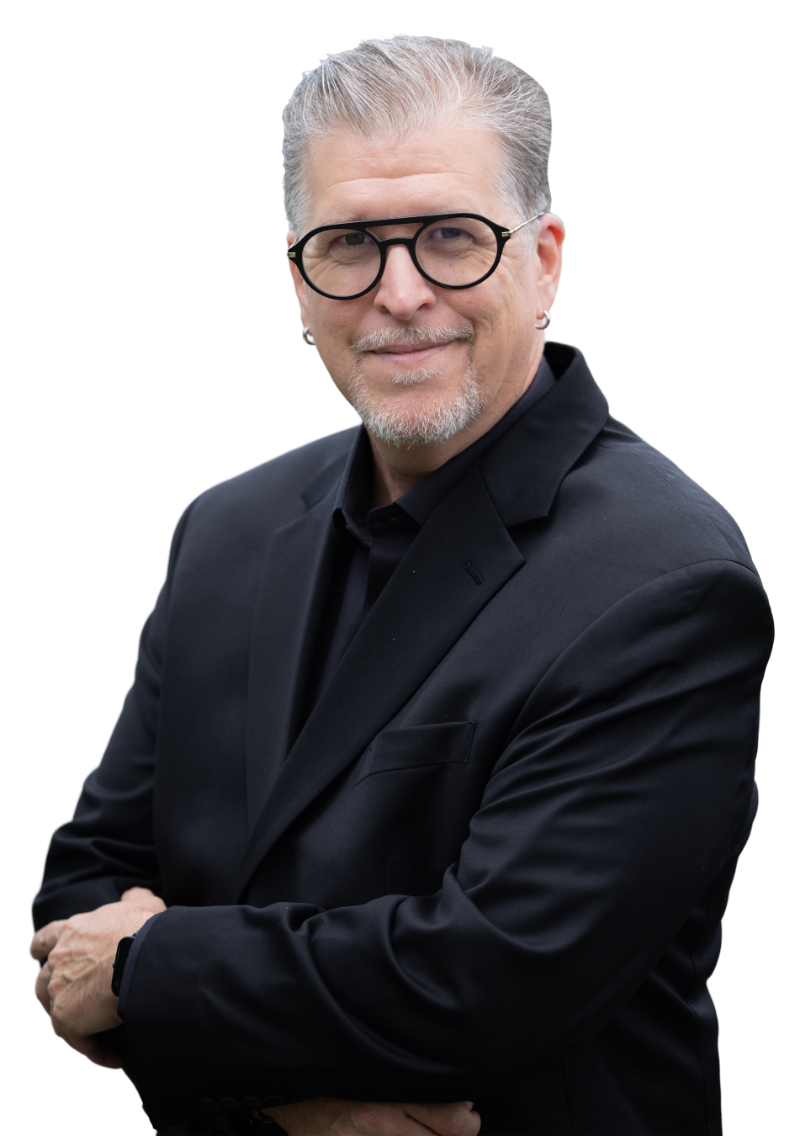



Matthew Griffin
Hey! Want to get to know me better?
I grew up in Juniata Park in Philadelphia in a working-class family where I learned pretty early what hard work and sacrifice looked like.
My parents worked—a lot. My mom worked two jobs. My dad worked three. Some nights, my brothers and I would go with them to office buildings and help clean as part of a cleaning service.
At the same time, my parents made an enormous sacrifice to send my brothers and me to Ancillae Assumpta Academy, a private school where my world suddenly became much bigger.
I would spend nights cleaning offices with my family and then go to school with kids whose parents were doctors, lawyers and successful professionals.
Looking back, that contrast was one of the great gifts my parents gave me.
I learned very young that I could sit down and talk with almost anyone. I had friends of different races, nationalities and economic backgrounds. I learned to be curious about people instead of intimidated by our differences.
Most importantly, I learned that education mattered.
My parents taught me that through their actions.
My mother became my first real mentor. She eventually worked as an underwriter for the Department of Housing, and real estate became something of a family business.
That is how, somewhat reluctantly, I ended up in real estate.
I Wasn’t Supposed to Be a Realtor
In 1988, I decided I didn’t want to continue college.I wanted to be a musician.
Unfortunately, wanting to be a musician and paying your bills aren’t always the same thing.
I needed a job, so I went to work as an assistant to an older sibling who was already in real estate.
That’s where this started.
For a lot of years, I would probably describe myself as a reluctant Realtor. Real estate wasn’t necessarily what I thought I was supposed to do with my life. It was simply something I knew how to do.
But I kept learning.
I worked in residential real estate. I represented sellers and buyers. Early in my career, I was exposed to buyer and seller representation concepts being taught in California well before those practices became common in East Coast markets.
When I moved to San Francisco, I worked in property management with apartments and commercial properties.
When I returned from California, I worked as an office conveyancer and learned what happens behind the scenes to actually get a real-estate transaction from agreement to closing.
Eventually, I moved into mortgage banking.
I became a loan officer, then a mortgage broker, and ultimately moved through the operational side of the mortgage business into senior operations management.
That experience changed the way I look at problems.
I worked across sales, processing, underwriting and vendor operations. I managed vendors nationally and internationally. I became a Lean Six Sigma Black Belt and learned to look at complicated problems as systems rather than isolated events.
- Who is responsible?
- What needs to happen?
- When does it happen?
- When do we follow up?
- How are we doing it?
- Why are we doing it?
- What were the results?
- And what happens next?
I didn’t realize it at the time, but all of those experiences were teaching me how to do the work I do today.
Then Life Changed the Plan
Eventually, I became tired of the mortgage industry and decided to do something completely different.
During COVID, while a lot of people were trying to get out of teaching, I decided to get in.
I became a seventh- and eighth-grade math teacher.
Teaching reinforced something important for me: knowing something and being able to explain it to another human being are two very different skills.
I’m analytical by nature. I can over-explain. Teaching—and life—have taught me to slow down, ask questions and make sure the person sitting across from me actually understands what matters before giving them more information.
But the experience that changed me most wasn’t professional.
It was my mom.
My mother developed Alzheimer’s.
Watching someone who had been my first mentor slowly disappear through dementia was one of the most painful experiences of my life.
I sometimes call Alzheimer’s the long goodbye.
If you’ve gone through it with someone you love, there is a kind of understanding that doesn’t require much explanation. Sometimes you can meet another person who has lived it, look at each other and simply nod.
You know.
One of the hardest periods for me wasn’t necessarily near the end. It was earlier, when Mom still understood enough to realize that she had forgotten something, didn’t know where she was, or had made a mistake.
I watched the fear.
I watched the anxiety.
And I watched the shame.
Later, when she was less aware of what Alzheimer’s was taking from her, there was sometimes an unexpected kind of peace. I could sit with her, make her laugh, tell her jokes and simply be present with her.
She wasn’t the same person she had been.
But she was still my mom.
I don’t think I would be the same person today if I hadn’t gone through that experience.
Six Minutes Changed My Life
A few years later, I met Rita Rivera on Facebook Dating.
At the time, I had a rule: I wasn’t dating anyone who lived more than an hour away.
Rita lived an hour and six minutes away.
Apparently, six minutes was negotiable.
We clicked almost immediately. Once we started talking, I stopped dating other people. She stopped dating other people.
One of the things we bonded over very early was that we had both lost our mothers to dementia.
Rita worked in senior living and senior placement, and through her I began learning an industry that was new to me but felt strangely familiar.
Senior placement reminded me of real estate in an important way: families were facing enormous decisions, often with incomplete information, under tremendous emotional pressure.
Eventually, Rita and I created SAGE: Senior Advisors & Guidance Experts, a free service that helps seniors and their families understand senior-living options and find communities where their loved ones can be safe and thrive.
And that’s when decades of seemingly unrelated experiences finally started connecting.
Why I Came Back to Real Estate
As I worked with seniors and their adult children, I kept seeing the same problem.
The family had figured out that Mom or Dad needed a different living situation.
We could help them find the right community.
But then came another question:
How are we going to pay for it?
For many families, a significant part of the answer was sitting in the family home.
Their parents might not have enormous savings sitting in a bank account, but they had spent 30 or 40 years making mortgage payments and building equity.
The home wasn’t simply a piece of real estate.
It represented decades of work.
And too often, families were being forced to make decisions about that asset at the worst possible moment.
Mom can’t go home.
The community needs money.
The family doesn’t know what to do with the house.
Everyone is overwhelmed.
And suddenly somebody shows up with a cash offer.
That’s when I realized I wanted to return to real estate—but this time, I wasn’t reluctant.
I knew exactly why I was coming back.
I wanted to use everything I had learned over the years—real estate, mortgages, operations, financing, process improvement, teaching and senior living—to help families understand that they may have choices.
Maybe the house should be sold traditionally.
Maybe selling as-is makes sense.
Maybe an investor really is the best solution.
Or maybe a bridge loan, home-equity solution or other financing strategy can create enough time so the family doesn’t have to make a permanent financial decision in the middle of an emergency.
There isn’t one answer that’s right for every family.
That’s the point.
My job is to help figure out the plan.
What I Believe Today
I’ve been doing some form of this work since 1988, and I’ll be the first person to tell you that I haven’t always done everything right.
I was young once. I’ve made mistakes. I’ve followed conventional wisdom that I later learned wasn’t very wise.
Experience has changed me.
One thing I have very little patience for today is watching someone use fear, knowledge, power or leverage to take advantage of somebody who is vulnerable.
I don’t like bullies.
And when a senior or their adult children are making decisions about a home that may represent a lifetime of accumulated wealth, I believe they deserve someone in their corner who understands what is at stake.
That doesn’t mean I automatically oppose investors. Investors have an important place in real estate, and sometimes an investor sale really is the best decision for a family.
But I believe the family should make that decision because they understand their options—not because somebody smelled blood in the water and pressured them into signing first.
That’s why one of the most important things I tell families is:
Time is either on your side or your enemy.
Talk to me before there’s an emergency and we may be able to create more choices.
Call me during the emergency and we’ll still do everything we can—but the available choices may be narrower.
I don’t measure success simply by getting another closing.
Some of the most satisfying words I can hear from a client are:
“I should have done this two years ago. Thank you.”
Because that usually means something that once felt impossible doesn’t anymore.
There is a plan.
They’re moving forward.
And they don’t feel like they’re doing it alone.
Today, I’m grateful to be able to say:
I help South Jersey seniors and their families make a plan for the home and what comes next.
That’s not where I expected to end up when I walked into a real-estate office in 1988 because I needed a job while I tried to become a musician.
But looking back now, I can see how all the pieces connect.
And maybe that’s appropriate.
Because seeing how all the pieces connect is what I’ve spent most of my life learning to do.